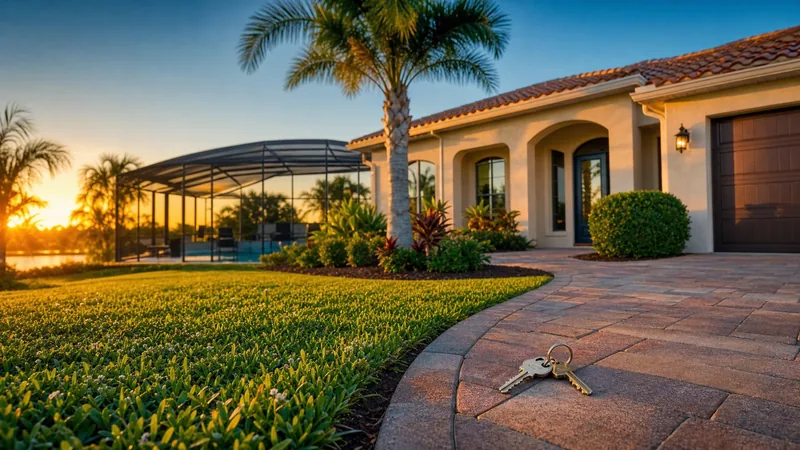
How to Become a Home Inspector in Florida: Wind Mitigation and 4-Point Too
How to Become a Home Inspector in Florida: Wind Mitigation and 4-Point Too
If you want to become a home inspector in Florida, the state license is only the starting point. Many inspectors who build steady residential work here also perform the inspections that homeowners' insurers request, especially wind mitigation inspections and 4-point inspections. Insurers use these reports to decide whether to write or renew a policy and how to price it, so they are a common source of paid work for Florida inspectors.
This guide covers the license path set out in Florida law, what you need before you start, and how the insurance-specific inspections fit into your business. It is informational content, not legal or tax advice. Requirements and fees change, so confirm every step with the agency named below before you spend money or sign a contract.
What You Need Before You Start
Gather these items before you enroll in a course. Some of them take weeks to arrange, so do not leave them until the end.
- Proof of eligibility and identification for the Florida Department of Business and Professional Regulation (DBPR) application. Confirm the exact document list on the DBPR site.
- Enrollment in a 120-hour pre-licensure home inspection course from a provider whose course DBPR accepts.
- Electronic fingerprints, submitted as required under s. 468.8313.
- Commercial general liability insurance of at least $300,000, as required under s. 468.8322.
- A 3-hour hurricane mitigation training course if you plan to sign wind mitigation forms.
- A current copy of Form OIR-B1-1802, the wind mitigation form, from the Florida Office of Insurance Regulation.
- A business structure, usually a limited liability company (LLC), and a Florida registered agent if you form one.
- Field tools: a flashlight, a ladder you can use safely, a moisture meter, a tape measure, a digital camera or phone, and inspection and reporting software.
Step-by-Step: Getting Licensed in Florida
Florida licenses home inspectors through DBPR. The steps below follow the order most applicants use. Fees for the course, exam, fingerprinting, and application are not listed in this guide, so check each one on the agency page or with the provider before you pay.
-
Confirm your eligibility. Florida sets basic qualifications for home inspector applicants, including age and education requirements. Check the current criteria with DBPR before you enroll. The rules that apply are the ones in effect when you apply, which may differ from what a provider's website says.
-
Complete the 120-hour course. Florida requires a 120-hour home inspection course. Before you pay a provider, confirm on DBPR's site that the course is approved for licensing. A good course covers structure, roofing, electrical, plumbing, HVAC, and the standards of practice that govern your inspection reports. Ask whether the provider offers practical field instruction, because reading about a roof is very different from walking one.
-
Pass the state licensing exam. After the course, you take the state exam through the testing vendor DBPR designates. Confirm the scheduling process, the passing standard, and the retake rules with DBPR. Study the material on the standards of practice and the code-related topics, since the exam tests your knowledge of what an inspector must check and report.
-
Submit electronic fingerprints. Fingerprints must be submitted electronically under s. 468.8313. Background results take time, and the time varies, so schedule this step early. Confirm which vendors and submission methods DBPR currently accepts.
-
Buy liability insurance. Florida requires commercial general liability coverage of at least $300,000 under s. 468.8322. Get quotes before you apply, and ask DBPR what proof of coverage it requires with your application. Do not assume that a personal policy or a general business policy meets the requirement. Confirm the coverage terms with your insurance agent.
-
Apply for your license. Submit your application to DBPR through its online licensing system. Pay the application and license fees listed on the agency page at the time you apply. Keep copies of every document you upload, along with your course completion record, exam result, fingerprint confirmation, and insurance certificate.
-
Complete the hurricane mitigation training. Under s. 627.711, a licensed home inspector with 3 hours of hurricane mitigation training may sign the wind mitigation form OIR-B1-1802. The training must be approved by the Construction Industry Licensing Board and include a proficiency exam, so confirm which courses qualify with DBPR. Also confirm whether these 3 hours can count toward your initial licensing education or must be taken separately. Keep the completion certificate with your records.
-
Set up your business. Florida has no general statewide business license, so you do not need a state license to operate as a business owner. However, the local business tax receipt is a tax, not a competency license, and not every county or city levies one. Check with the city and county where you will operate. If you form an LLC, the filing fee for the Articles of Organization is $125, and the annual report fee is $138.75, due each year between January 1 and May 1. A $400 late fee applies to reports received after May 1. File through Sunbiz at dos.fl.gov/sunbiz. The $125 includes the required $25 registered agent designation. If you sell taxable goods or services, register as a sales and use tax dealer with the Florida Department of Revenue before you begin business. Confirm whether your inspection services are taxable with the Department of Revenue or a tax professional.
-
Get on insurer and program lists. Once licensed, contact the insurance companies and agencies that order inspections in your area and ask how they accept reports. Separately, look into the state's My Safe Florida Home program. Confirm how inspectors enroll and what the program requires on the program's official page.
How Wind Mitigation Inspections Work
A wind mitigation inspection documents features of a home that reduce wind damage risk, such as the roof covering, the roof deck attachment, and the connections between the roof and walls. Insurers may use the results to apply a wind mitigation discount. The discount amount depends on the insurer and the findings, so do not promise a specific savings figure to a client.
On Form OIR-B1-1802, the inspector records items such as the roof covering type, roof shape, roof-to-wall connection, roof deck attachment, secondary water resistance, and how openings such as windows and doors are protected. Work through each item methodically in the attic and on the roof, and photograph everything you record. Your photos are the evidence that supports your answers if an insurer or homeowner questions the form.
How 4-Point Inspections Fit In
A 4-point inspection is a report that insurers commonly require for older homes or for homes applying for certain coverage. It generally covers four major systems: the roof, electrical, plumbing, and HVAC. Each insurer sets its own requirements, including the form it accepts, how old a report can be, and what it wants photographed. Ask each insurer for its current requirements in writing before you take an order.
Because 4-point work follows insurer-specific rules, it is a good place to build relationships with insurance agencies. Keep a short template for each insurer so that every report includes the items that company requires, and no more or less.
My Safe Florida Home Inspections
My Safe Florida Home is a state program that offers wind mitigation inspections and retrofit assistance to eligible homeowners. Inspectors who take part in the program follow the program's own procedures and reporting requirements. Because those requirements can change, confirm the current enrollment process, the inspection standards, and the payment terms with the program administrator before you agree to take program work.
Tips for a Faster, Cleaner Launch
- Start the fingerprint and insurance steps early. They are the most common sources of delay between finishing the course and getting licensed.
- Keep a compliance folder. Store every certificate, receipt, confirmation, and form version in one place. You will need them for renewals, insurer audits, and future questions.
- Use the current form. Download OIR-B1-1802 from the Office of Insurance Regulation each time you start a job, and check for updates before you sign.
- Specialize in the work you can do well. Wind mitigation and 4-point reports are repeatable, so they can make a good early focus while you build general inspection experience.
- Talk to a professional. A licensed attorney can help you choose a business structure and review your contracts. A CPA can explain how your income will be taxed. This guide is not a substitute for that advice.
Common Mistakes to Avoid
- Signing a wind mitigation form without the required training. The 3-hour hurricane mitigation training is what allows a licensed home inspector to sign OIR-B1-1802. Confirm your qualification before you sign anything.
- Assuming a course is approved. Check DBPR's records before you pay a provider. An unapproved course will not lead to a license.
- Underinsuring the business. The $300,000 commercial general liability minimum is a floor set by statute. Confirm the coverage you buy meets it and fits the work you plan to do.
- Treating the local business tax receipt as a license. It is a tax. Your competency to inspect comes from DBPR, while the receipt is a separate local requirement that not every jurisdiction levies.
- Using old forms or insurer templates. Requirements change. A report that was accepted last year may be rejected today.
- Skipping the photographs. A report without clear photos is hard to defend when an insurer, homeowner, or agency asks questions.
- Naming your LLC without checking the name. Florida names must be distinguishable on the state's records. Search the name on Sunbiz at search.sunbiz.org before you file, and do not assume a name is approved until you receive a filing acknowledgment.
What to Expect in Your First Year
Results vary widely, and no one can promise you a specific number of inspections, a specific income, or a specific timeline. Most new inspectors spend the first stretch of their business completing licensing, setting up insurance and accounting, and building relationships with agencies and inspection companies. Early reports usually take longer than experienced reports do, so budget time for that learning curve. Many inspectors find that insurance-specific work is a practical way to build a steady pipeline while they develop a broader inspection practice.
Expect the process to take as long as the slowest step, which is often fingerprinting, the exam schedule, or insurance paperwork. Plan your first months around those steps rather than around the course length alone.
Next Steps
Start with the DBPR licensing page on the state's official website and confirm eligibility, the course approval process, and current fees. Then get the wind mitigation form from the Office of Insurance Regulation and confirm qualifying hurricane mitigation training with DBPR, and look up the My Safe Florida Home program page. Before you form an LLC, check the Florida Department of State's Sunbiz site at dos.fl.gov/sunbiz, and check with your city and county about the local business tax receipt.
For planning help, the Florida SBDC Network at floridasbdc.org offers free business advising, and tax registration questions go to the Florida Department of Revenue at floridarevenue.com.
Important Disclaimer
This article is informational only. It is not legal, tax, or insurance advice, and it does not guarantee any license, approval, or insurer acceptance. Statutes, agency rules, forms, and fees change. Confirm current requirements directly with the Florida Department of Business and Professional Regulation, the Office of Insurance Regulation, the Florida Department of Revenue, and the appropriate county or city office. For complex situations, including entity choice, contracts, and tax treatment, consult a qualified attorney or certified public accountant.
Keep exploring: related Florida guides
- How to Get a Florida CAM License and Start an HOA Management Company
- How to Become a Notary in Florida and Start a Mobile Notary Business
- How to Become a Bail Bondsman in Florida
- How to Become a Process Server in Florida
- How to Start an LLC in Florida
- Florida Business License
- How Much Does It Cost to Start a Business in Florida
- All Florida business types
- Every Florida guide in one place