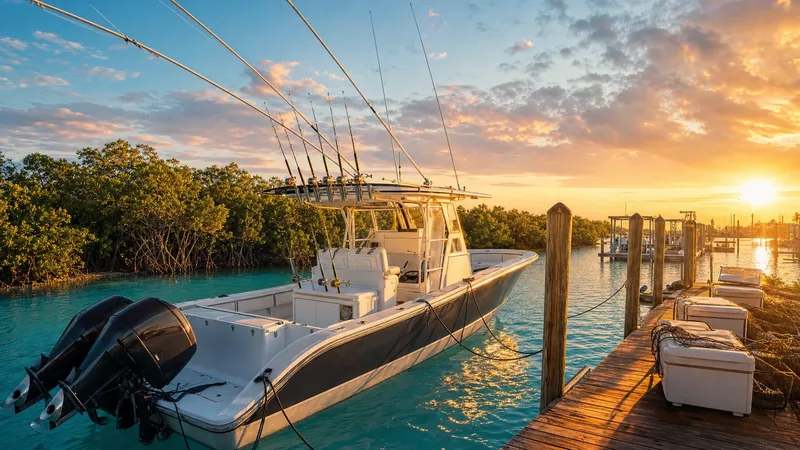
How to Become a Yacht Broker in Florida
How to Become a Yacht Broker in Florida
If you want to sell yachts in Florida, the state license is the first thing to get right. The Florida yacht broker license is issued by the Department of Business and Professional Regulation (DBPR), through its Division of Florida Condominiums, Timeshares and Mobile Homes, under chapter 326 of the Florida Statutes. The path has two tiers: a salesperson license first, then a broker license. This guide walks through the steps in the order you will actually face them.
Disclaimer: This article is informational, not legal or tax advice. Licensing rules, bond requirements, fees, and processing times can change. Confirm every figure with DBPR before you file, and talk to a Florida attorney or CPA about your entity, contracts, and tax treatment of commissions.
What You Need Before You Start
Gather these items before you open the application. Missing one usually means a stalled file, not a rejection, but it still costs weeks.
- Your legal name and contact details, matching the government ID you will use for fingerprinting
- Fingerprints taken through the process DBPR specifies for its licensees
- A surety bond: $10,000 for a salesperson, $25,000 for a broker
- Yacht sales records (for the broker route) or approved education credits (20 credits is the alternative standard)
- Your business entity documents if you will sell through an LLC or corporation
- A Florida registered agent address if you form an entity (no P.O. Box)
- Budget for fees from DBPR, the bond company, and any local tax receipt. Confirm the current DBPR application and license fees on the DBPR licensing portal at myfloridalicense.com.
Step 1: Confirm the Licensing Rule Covers Your Boats
Chapter 326 licensing applies to yachts over 32 feet. If most of the vessels you plan to sell are smaller, you may not need this license for those sales, but you should confirm that scope with DBPR in writing before you advertise or take a listing. Do not assume a boat's length from a listing sheet. Measure the way DBPR's rules and your listing agreements define length, and document it.
Also decide early whether you want to sell only as an individual or through a company. The answer affects Step 8, not the license itself.
Step 2: Plan to Start as a Salesperson
Florida licenses yacht and ship brokers and salespersons separately. You cannot go straight to the broker license. Under section 326.004, a broker applicant must first hold a salesperson license and show either 4 yacht sales or 20 approved education credits. Treat the salesperson license as the first real milestone and the start of your sales record, not a formality.
Ask DBPR whether your salesperson license must be tied to a sponsoring or employing broker, and how a change of employer is reported. Those rules affect where you can list boats and how your name appears on sales paperwork.
Step 3: Get Fingerprinted
DBPR requires fingerprints for yacht and ship broker and salesperson applicants. Schedule this early, because background results gate the rest of the file. Use only the fingerprint process DBPR names on its application instructions. Keep the receipt or confirmation, and make sure the name on it matches your application exactly.
A common delay comes from a name mismatch: a middle initial on one form and not the other, or a nickname used on the fingerprint card. Pick one legal name and use it everywhere.
Step 4: Obtain the Surety Bond
Florida requires a surety bond for these licenses. The amounts are $10,000 for a salesperson and $25,000 for a broker. A bond is not insurance for you. It is a guarantee to the public, and the surety can pursue you for amounts it pays out on a valid claim. You pay the bond company a premium, usually a percentage of the bond amount, so ask for the quote in writing and compare it with the premium you would pay in a year.
Bonding is one of the places where applicants overpay. Ask a bond agent specifically whether the bond you buy matches the license type and amount DBPR requires, and get the bond form in the format DBPR accepts.
Step 5: Submit the Salesperson Application
File the salesperson application with DBPR's Division of Florida Condominiums, Timeshares and Mobile Homes through the DBPR licensing system. Attach or submit:
- The completed application with your legal name and contact details
- Your fingerprint confirmation
- The surety bond at the $10,000 salesperson amount
- Any other documents the current application lists
Read the application checklist on the day you file, not from memory. Forms and attachment rules change. Save a complete copy of everything you submit, along with the confirmation number. Ask the division for its current processing estimate before you plan a boat show or a listing launch around the license.
Step 6: Build Your Record for the Broker License
Once you hold the salesperson license, you need one of two things to qualify for the broker license:
- Four yacht sales completed while you were licensed, with records you can document
- 20 approved education credits from courses DBPR recognizes
Keep a sales log from the first deal. Record the date, the vessel's make, model, and length, the parties' names, the role you played, and the paperwork that proves it. A log built from memory three years later rarely satisfies a reviewer. For the education route, do not assume a course counts. Get written confirmation from DBPR or the course provider that the credits are approved before you pay for them.
Step 7: Apply for the Broker License
Once you meet the experience or education requirement, file the broker application through the same DBPR system. Expect to include the $25,000 broker bond, updated fingerprints or confirmation if DBPR asks for them, and your sales record or course certificates. Confirm the exact attachments and the current fee on DBPR's site.
Before you file, read every answer against your records. An inaccurate sales count is a bigger problem than a late form, because it can delay the license or create a problem later.
Step 8: Set Up Your Business Entity
Florida has no general statewide business license, so the license above is your competency credential. Your business structure is a separate decision. Many brokers operate through an LLC. If you go that route, the Florida Department of State, Division of Corporations (Sunbiz) handles the formation:
- Formation document: Articles of Organization for a Florida LLC, filed through Sunbiz eFile at dos.fl.gov/sunbiz/start-business/efile/fl-llc
- Filing fee: $125
- Name: must end in Limited Liability Company, LLC, or L.L.C., and must be distinguishable on state records. Do not treat a name as approved until you receive the filing acknowledgment.
- Registered agent: required, with a Florida street address and the agent's signed acceptance. The $25 LLC designation fee is included in the $125 filing fee. An entity cannot serve as its own registered agent.
- Annual report: $138.75, filed each year between January 1 and May 1. A $400 late fee applies after May 1, bringing the total to $538.75.
Florida has no state franchise tax and no personal income tax for individuals. An LLC taxed as a partnership or disregarded entity generally does not file a Florida corporate income tax return, though a Florida Partnership Information Return is required if one or more owners is a corporation. An LLC taxed as a corporation for federal purposes pays the 5.5% Florida corporate income and franchise tax. Confirm which applies to you with a CPA.
Whether a yacht broker's commission is subject to Florida sales tax is a question for the Florida Department of Revenue, not this guide. If you sell taxable goods or services, you must register as a sales and use tax dealer before you begin business. Start at floridarevenue.com and confirm your situation there.
Step 9: Check Local Requirements
Many Florida cities and counties require a local Business Tax Receipt (BTR) for the address where you operate, but not every one does. The BTR is authorized under chapter 205 and is a tax, not a competency license. Its presence tells you nothing about whether you are qualified to sell yachts. Contact the local tax collector for the city or county where your office or dock is located and ask whether a BTR applies.
Because Florida's major yacht markets sit in specific counties, check the local rule for each location where you will work, including any marina office you rent.
Where the Work Happens
Two markets dominate Florida yacht brokerage: Fort Lauderdale and Palm Beach. Fort Lauderdale draws a large share of the state's sales volume, and many brokers base themselves there for access to marinas and buyers. Palm Beach serves a different, often higher-value segment. Choose your market based on the boats you can realistically list and the sales record you can build, not on a reputation alone.
Expected Results
Once licensed, you may be able to list and broker yachts within the scope of chapter 326. Many new brokers find the first year is mostly about building a sales record, learning the paperwork, and establishing relationships with marinas, surveyors, and lenders. Results vary with the market, the boats you handle, and your effort, and no outcome is guaranteed. Plan your finances around the period before your first commission, not around the license itself.
Tips for a Smoother Application
- Start fingerprinting and the bond quote on the same day you start the application.
- Keep one legal name across every form, bond, and sales record.
- Log every transaction from the first one, with documents attached.
- Ask DBPR for written answers on any scope question, especially the 32-foot threshold and sponsorship rules.
- Get education credit approval in writing before paying for a course.
- Calendar the LLC annual report window, January 1 to May 1, the day you form the company.
Common Mistakes to Avoid
- Buying the broker bond too early. You need to confirm your qualifying record before the bond amount is useful to you.
- Assuming every boat is covered. The chapter 326 scope turns on the length threshold, so verify it for each vessel class you plan to handle.
- Counting unlicensed or undocumented sales. A sale without records is hard to prove.
- Skipping the salesperson step. The broker route runs through the salesperson license.
- Treating the BTR as the license. The local receipt is a tax item, and it does not replace DBPR's yacht broker license.
- Missing the LLC annual report. A late filing after May 1 adds a $400 fee, and failure to file by the third Friday in September can lead to administrative dissolution.
When to Get Professional Help
Talk to a Florida attorney about your brokerage agreements, listing contracts, and any liability questions. Talk to a CPA about entity structure, the Florida corporate tax treatment that fits your LLC, and how commissions are reported. Both can save you from expensive corrections later.
Final reminder: This article is informational, not legal or tax advice. Confirm every fee, deadline, and requirement with DBPR, the Florida Department of State, and the Florida Department of Revenue before you file.
Keep exploring: related Florida guides
- How to Get a Florida Real Estate License and Start Your Business
- How to Become a Real Estate Appraiser in Florida
- How to Become a Public Adjuster in Florida
- How to Start a Debt Collection Agency in Florida
- How to Start an LLC in Florida
- Florida Business License
- How Much Does It Cost to Start a Business in Florida
- All Florida business types
- Every Florida guide in one place