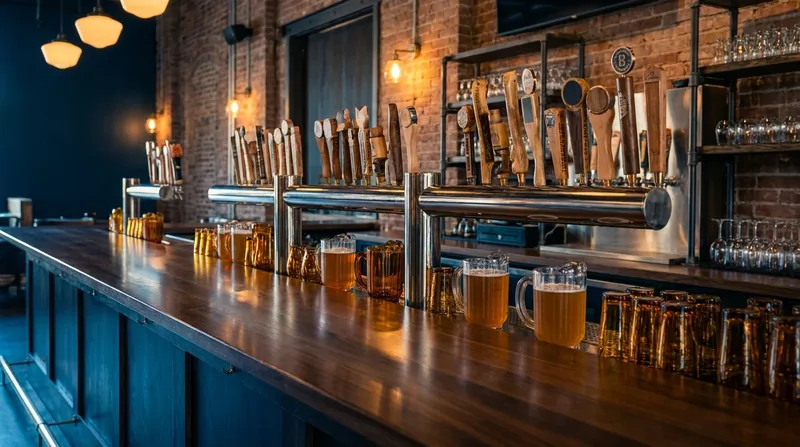
How to Start a Brewery, Distillery or Winery in Florida
How to Start a Brewery, Distillery or Winery in Florida
Starting a brewery, craft distillery or farm winery in Florida is a sequence of approvals, and the order matters. The federal government licenses production first through the Alcohol and Tobacco Tax and Trade Bureau (TTB). Florida then adds its own licenses, certifications and local requirements. If you sign a lease or order stills before you know which Florida license fits your plan, you can pay for equipment and space you cannot yet use.
This guide covers the florida brewery license path, the florida craft distillery license path and the florida winery license path (the florida farm winery certification), along with the Florida formation and tax steps that apply to all three. If you are trying to understand how to start a brewery business in florida from scratch, work through the steps below in order.
Disclaimer: This article is informational content, not legal or tax advice. Florida alcohol and agricultural rules change, and the details that matter for your project depend on your location, ownership structure and product plan. Consult a qualified attorney who handles alcohol licensing and a CPA before you sign a lease, buy equipment or file a tax return.
Choose the Right License Path First
These are three different businesses with different limits. Decide which one you are building before anything else, because the state approval and the production caps follow from that choice.
| Business type | Florida approval | Limits and requirements |
|---|---|---|
| Brewery | Brewery manufacturer license, plus taproom vendor rules | Taproom sales are governed by separate vendor rules. Confirm the taproom requirements with DBPR before you design your floor plan. |
| Craft distillery | Craft distillery license under s. 565.03 | Up to 250,000 gallons a year. Up to 75,000 gallons of branded products sold directly to consumers. From July 1, 2026, at least 60% of branded products must be distilled in Florida with a Florida agricultural product. |
| Farm winery | Farm winery certification from the Florida Department of Agriculture and Consumer Services (FDACS), under chapter 599 | Under 250,000 gallons a year. At least 60% Florida product. At least 5 acres. Open at least 30 hours a week. $100 fee. |
What You Need Before You File
Gather these items first. Most applications ask for the same core information, and having it ready keeps the process moving.
- A production volume estimate in gallons per year, checked against the 250,000 gallon ceiling for distilleries and wineries.
- Core ingredients and a sourcing plan. For beer, malt, hops, yeast and water. For spirits, a fermentable mash such as grain or fruit. For wine, grapes or other fruit, plus yeast. Map each input to whether it is a Florida agricultural product, because the 60% tests depend on it. Confirm with the agency how the test is measured.
- A Florida legal entity, either an LLC or a corporation, with a name you have checked on Sunbiz.
- A registered agent with a physical Florida street address. A P.O. Box does not qualify.
- A production site with a confirmed address. For a farm winery, be ready to document at least 5 acres.
- An equipment list: brewhouse and fermenters, a still and condenser, barrels or tanks, kegs, and a bottling or canning line if you package on site.
- Draft labels and brand names, which the federal TTB label review will examine.
- Insurance quotes, a business bank account and a sales tax registration plan.
Step-by-Step Process
Step 1: Form your Florida entity and check the name
Most owners form a Florida LLC through the Division of Corporations (Sunbiz) at the Florida Department of State. The name must end in Limited Liability Company, LLC or L.L.C. Search the name at the Sunbiz corporation search. Do not treat a name as approved until you receive a filing acknowledgment, and the name must be distinguishable on state records.
The required fee for Articles of Organization is $125 (a $100 filing fee plus the $25 registered agent designation), and you can file through Sunbiz eFile. If you need a name held while you prepare the filing, a name reservation costs $25 and lasts 120 days. Corporations file Articles of Incorporation for a Florida profit corporation for $70, which includes the $35 registered agent designation. The Division publishes no guaranteed turnaround and offers no expedited filing. Online filings are processed in the order received. If you need speed, walk-in service is available at 2415 N. Monroe Street, Suite 810, Tallahassee, Monday to Friday 8am to 5pm, where most requests are completed while you wait.
Your registered agent designation costs $25 for an LLC and $35 for a corporation. The agent must sign to accept the appointment. An entity cannot serve as its own registered agent, though an owner or officer who is an individual may.
Florida has no state franchise tax and no personal income tax. An LLC taxed as a partnership or disregarded entity generally does not file a Florida corporate income tax return, but a Florida Partnership Information Return is required if one or more owners is a corporation. An LLC taxed as a corporation for federal purposes pays the 5.5% Florida corporate income tax. Confirm your classification with a CPA before you choose.
Step 2: Obtain your federal TTB permit first
Federal approval comes first in the sequence. TTB issues the federal permits for breweries, distilleries and wineries, and it also reviews labels. Start your federal application early, because the production volume, site and label information you submit must match what you later file with the state. Confirm the current permit type, forms and processing times directly with TTB, since those details are not covered in this guide.
Ask DBPR and FDACS whether they require a copy of your federal permit with the state application. Plan on it, and do not sign production equipment contracts until both sides agree on the timeline.
Step 3: Apply for the state license or certification
Brewery. Breweries apply for a brewery manufacturer license, and the taproom operates under separate vendor rules. Confirm the current application, fees and taproom requirements with the alcoholic beverage licensing unit at the Florida Department of Business and Professional Regulation (DBPR). DBPR licenses many professions and trades, so confirm the exact division before you submit.
Craft distillery. A craft distillery license operates under s. 565.03. You must stay within 250,000 gallons a year of total production, and no more than 75,000 gallons of branded products may be sold directly to consumers. Starting July 1, 2026, at least 60% of your branded products must be distilled in Florida with a Florida agricultural product. If your recipe depends on out-of-state grain or fruit, model that cost before you commit to a formulation.
Farm winery. A farm winery certification is issued by FDACS under chapter 599. The requirements are: under 250,000 gallons a year, at least 60% Florida product, at least 5 acres, open at least 30 hours a week, and a $100 fee. Confirm the application, inspection process and renewal schedule with FDACS before you plan your tasting room hours.
Step 4: Register for sales tax with the Department of Revenue
Businesses selling taxable goods must register as a sales and use tax dealer with the Florida Department of Revenue before they begin business. The state sales tax rate is 6%. Register through the Department of Revenue e-services registration page. Ask the Department whether any additional taxes or fees apply to your alcohol sales, because this guide does not list them.
Step 5: Obtain your local business tax receipt and confirm zoning
Florida issues no general statewide business license. Many cities and counties levy a local business tax receipt for the address where you operate, which is a tax under Chapter 205, not a competency license. Not every county or city levies it, so confirm with your local tax collector or city clerk. Also confirm zoning with your local planning office. Production, tasting rooms and farm operations are often treated differently, and your city or county may have its own location rules for alcohol production or sales.
Step 6: Register a fictitious name if you sell under a different brand
If the name on your bottles or taps differs from your LLC name, register a fictitious name (DBA). Registration costs $50 and is valid for 5 years, expiring December 31 of the fifth year. Renewal costs $50 and is filed between July 1 and December 31 of the expiration year. The name must be advertised at least once in a newspaper in the county of your principal place of business, although no proof of advertisement is filed. The registration is filed statewide with the Division of Corporations, not with the county. Use the Sunbiz fictitious name registration page to file it, and make sure the name matches what TTB approved on your labels.
Step 7: Set up the site, insurance and banking
Build out the production space to match your equipment plan and your local building and fire requirements. Bind insurance before you take deliveries of equipment or product. Open a bank account in the company name using your formation documents, and keep production, tasting room and retail sales records separate so you can meet the direct sales limits and your tax filings.
Step 8: Calendar your ongoing compliance
The LLC annual report is due each year between January 1 and May 1, and the fee is $138.75. A $400 late fee applies after May 1, for a total of $538.75. Failure to file by the third Friday in September leads to administrative dissolution. Corporations file a Profit Annual Report for $150 in the same window, with a $400 late fee after May 1 for a total of $550. Calendar the state report, your sales tax filings, the local business tax receipt renewal, and your TTB and FDACS or DBPR renewal dates in one place.
Expected Results and Timeline
A correctly sequenced filing plan may help you avoid rework, such as redesigning a label after federal review or moving equipment because a site failed zoning. Once licensed, your production capacity and direct-sales volume will be shaped by the caps above, so the volume you forecast in your plan may affect the business model you can run.
Timelines vary by agency and by the completeness of your filings. The Division publishes no guaranteed turnaround for LLC filings, and this guide does not give processing times for TTB, DBPR or FDACS. Build a schedule with buffer time, and ask each agency for its current estimate before you commit to a lease or a launch date. Results you can plan around include a clean entity record, a matched set of federal and state approvals, and a compliance calendar. Any sales or revenue outcome depends on your product, market and execution, and it cannot be predicted from licensing alone.
Common Mistakes to Avoid
- Signing a lease or ordering a still first. Confirm the license category, location rules and the federal permit before you commit money to space or equipment.
- Assuming Florida has a general business license. It does not, but a local business tax receipt may still apply to your address.
- Forecasting past the caps. A distillery or winery plan above 250,000 gallons a year, or direct sales above 75,000 gallons of branded products, needs a different plan.
- Overlooking the 60% Florida requirement. For distilleries, the rule applies to branded products from July 1, 2026. Map your ingredients to it before you finalize a recipe or purchase order.
- Using a brand name before checks are complete. Search Sunbiz, register any fictitious name, and wait for TTB label approval before you print packaging.
- Missing the LLC annual report window. File between January 1 and May 1 to avoid the $400 late fee, and file by the third Friday in September to avoid administrative dissolution.
- Using a P.O. Box for the registered agent. The agent needs a physical Florida street address.
- Planning farm winery hours or acreage later. Confirm the 5-acre and 30-hour requirements before you buy land or set a tasting room schedule.
Next Steps
Write down which license path fits your plan, then build a checklist that puts TTB first, followed by the Florida entity, the state license or certification, sales tax registration and the local business tax receipt. The Florida SBDC Network offers free and low-cost business advising that can help you test your plan before you file. For the legal structure, label strategy, and any tax questions, bring this checklist to a qualified attorney and a CPA. Confirm every figure in this article with the agency that administers it before you act on it, because agency requirements change.
Keep exploring: related Florida guides
- How to Start a Bakery Business in Florida
- How to Start a Catering Business in Florida
- How to Open a Bar in Florida
- How to Start a Coffee Shop Business in Florida
- How to Start an LLC in Florida
- Florida Business License
- How Much Does It Cost to Start a Business in Florida
- All Florida business types
- Every Florida guide in one place