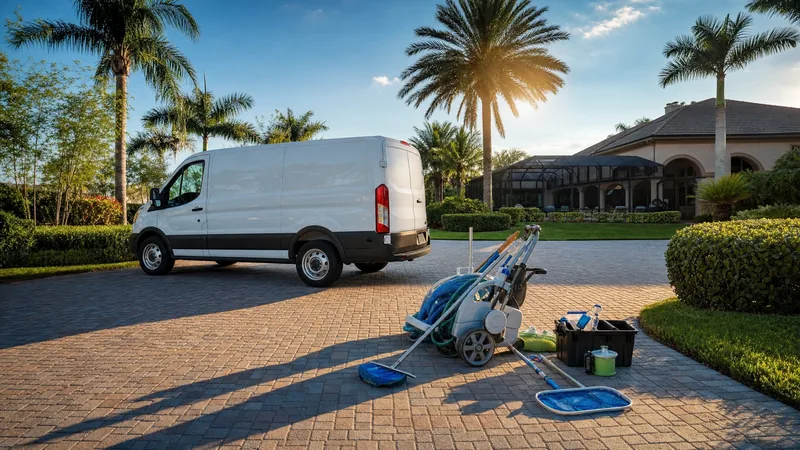
How to Become a Pool Contractor in Florida
How to Become a Pool Contractor in Florida
Florida pool contractors need a state license from the Construction Industry Licensing Board (CILB), which is administered by the Florida Department of Business and Professional Regulation (DBPR). The state's large residential pool market, including pool construction and screen enclosure work, keeps demand steady for licensed pool and spa contractors. The path to the license depends on which category you choose, and the rules differ from one category to the next.
This guide covers the Florida pool license requirements, the steps to apply, the business setup behind the license, and the mistakes that cost applicants time. Where this guide does not give a settled figure, it names the agency you should confirm it with, so you do not plan around a number that may have changed.
Florida Pool License Requirements at a Glance
The CILB issues three pool and spa contractor licenses. Choose the one that matches the work you will sell first, because moving to a different category later takes time.
| License | Scope (simplified) | Upgrade path under s. 489.111 |
|---|---|---|
| Pool/spa servicing contractor | Servicing existing pools and spas | To residential after 3 years; to commercial after 4 years |
| Residential pool/spa contractor | Pool and spa work on residential property | To commercial after 1 year |
| Commercial pool/spa contractor | Pool and spa work on commercial property | No upgrade path listed in this guide |
The scope descriptions above are simplified. Read the official license description on the DBPR site before you choose. The upgrade periods come from s. 489.111 of the Florida Statutes. The statute may attach other conditions to an upgrade, so confirm them with DBPR before you plan around a specific date.
What You Need Before You Start
Gather these items before you open the application. Missing documents are one of the most common reasons applications stall.
- A decision on the license category you will pursue (commercial, residential, or servicing)
- A written work history covering pool and spa construction or service, with dates, job types, your role on each job, and people who can verify it
- The personal identification and contact information the application asks for
- Business entity documents if you will operate as an LLC or corporation, including Articles of Organization or Articles of Incorporation and a Florida registered agent
- A federal Employer Identification Number (EIN) from the IRS
- Funds for the application, exam, and business filings. Confirm current fees with DBPR and the Division of Corporations, since fees can change
- Insurance quotes for general liability coverage and, where applicable, workers' compensation
- Contact information for the local building department in each city or county where you plan to work
Step-by-Step: How to Get Your Florida Pool Contractor License
Step 1: Choose the license category that matches your work
Start with the first contracts you expect to sign. If your first customers are homeowners with backyard pools, the residential category fits. If you plan to maintain pools you did not build, servicing is the narrowest and most practical starting point, but you will need to plan for the upgrade waiting periods if you want to build new pools later. Pools at apartment complexes, hotels, or other commercial properties point to the commercial license. Do not pick a category based on what you hope to do in five years. Pick it based on the work you can document and sell now.
Step 2: Confirm your eligibility and experience with DBPR
Chapter 489 of the Florida Statutes sets the experience and examination requirements for each pool category. Download the current application and candidate information from DBPR, read the experience section line by line, and log your work as you go. Ask DBPR how it treats your specific history, such as supervisory roles compared with hands-on labor, before you count it toward eligibility. Years working around pools do not automatically qualify, so verify the rules before you assume you meet them.
Step 3: Prepare for and pass the licensing exam
Pool and spa applicants must pass the examination for their category. Confirm with DBPR which exam applies, how to register, the current exam fee, and how scheduling works, because these details can change. Study the reference materials the exam provider lists for your category, and work through practice questions until your answers are consistent. Build a buffer into your launch date in case you need a second attempt.
Step 4: Submit the application and pay the fee
Complete the application with your eligibility details, experience documentation, and exam information, then pay the fee for your category. Confirm the current amount and the accepted payment methods with DBPR. Keep a complete copy of everything you submit, including confirmation numbers. This guide does not list a verified processing time, so confirm current timelines with DBPR before you commit to a start date or sign customer contracts.
Step 5: Set up the business entity
Florida has no general statewide business license, but most pool companies operate through an LLC or a corporation. The Florida Division of Corporations, known as Sunbiz, handles those filings. For an LLC, the key steps are these:
- Articles of Organization: File online through Sunbiz eFile. The required total is $125, which includes the $25 registered agent designation.
- Name: The name must end in Limited Liability Company, LLC, or L.L.C., and it must be distinguishable on Sunbiz records. You can reserve a name for 120 days for $25. Do not assume a name is approved until you receive a filing acknowledgment.
- Registered agent: Appoint an agent with a physical street address in Florida. A P.O. box does not qualify. The designation fee for an LLC is $25. An entity cannot serve as its own registered agent, but an owner or officer can.
- Annual report: File each year between January 1 and May 1 for $138.75. A $400 late fee applies to reports received after May 1, bringing the total to $538.75. Failing to file by the third Friday in September leads to administrative dissolution.
A Florida profit corporation pays a $70 filing fee for Articles of Incorporation and a $150 Profit Annual Report, due in the same window, with a $400 late fee after May 1 for a total of $550. Florida has no personal income tax. An LLC taxed as a corporation for federal purposes pays the 5.5% Florida corporate income/franchise tax. Ask a CPA which structure fits your situation.
Step 6: Register for taxes and local business requirements
Get your EIN from the IRS before you open a business bank account or hire anyone. If any part of your business sells taxable goods or services, register with the Florida Department of Revenue before you begin business. The state sales tax rate is 6%. Pool work often mixes construction, service, and materials, and how sales tax applies can depend on the transaction, so ask a CPA to review your billing structure.
Florida has no general state business license, but your city or county may require a local business tax receipt for the address where you operate. This receipt is a tax under Chapter 205, not a competency license, and not every county or city levies it. Separately, pool construction generally requires permits from the local building department, so confirm the permit rules in every jurisdiction where you work.
Step 7: Secure insurance and confirm workers' compensation
Price general liability insurance before you bid your first job, and confirm the coverage limits that DBPR and your local jurisdictions require. Confirm your workers' compensation obligations before your first hire, since construction employers have specific rules. Keep certificates of insurance on file for every project. This guide does not state required coverage amounts, so get them from DBPR, your insurer, and the jurisdiction where you work.
What Your License Covers, and Where the Limits Are
A pool license does not cover every trade connected to a pool. Four limits matter for planning:
- Plumbing connections: Residential pool contractors may not connect directly to sewer or potable water lines. Hire a licensed plumber for those connections and build the cost and scheduling into your bids.
- Electrical and other trades: Pool projects involve bonding, lighting, and equipment wiring. Confirm which of that work your license covers, and bring in licensed trades for anything outside your scope.
- Screen enclosures: Many pool companies also build screen enclosures, which are a large part of Florida's residential pool market. Confirm with DBPR which license scope covers enclosure work before you bid it.
- Pending legislation: House Bill 453 (2025) would have rewritten the pool category, but it did not pass. Plan around the current categories described above, and confirm any future changes before you apply.
Tips for a Smoother Application
- Download the current DBPR candidate information first, then build your timeline from its requirements rather than from memory or forum posts.
- Start your experience log now. A dated record with job addresses, roles, and verifiers is far easier to assemble than a reconstructed one.
- If you need same-day business filing, the Division of Corporations does not offer expedited service, but its walk-in counter at 2415 N. Monroe Street, Suite 810, Tallahassee, is open Monday to Friday, 8am to 5pm. Most requests there are completed while you wait.
- Use the Florida SBDC Network for business planning help before you sign leases, vehicle loans, or equipment financing.
- Set a calendar reminder for the annual report window that opens January 1 and closes May 1.
Common Mistakes to Avoid
- Confusing the local permit with the state license. A building permit for one project does not replace the CILB license. You need both.
- Counting experience without checking the rules. Ask DBPR how it evaluates your work history before you submit anything.
- Ignoring the upgrade clock. A servicing license does not become a residential license on your schedule. Plan for the 3-year and 4-year waiting periods under s. 489.111 if you intend to upgrade.
- Making plumbing connections under a residential pool license. Hire a licensed plumber for sewer and potable water connections.
- Assuming a name is available. Search Sunbiz first, reserve the name if needed, and wait for the filing acknowledgment before you print signs or order branded materials.
- Missing the May 1 annual report deadline. A late LLC report costs $538.75 in total, and failing to file by the third Friday in September leads to administrative dissolution.
- Overlooking the local business tax receipt. Check whether the city or county where you operate levies one. Do not assume it does or does not.
- Planning around a bill that did not pass. HB 453 (2025) did not become law, so build your plan on the categories that exist today.
What Results to Expect
A Florida pool contractor license may open the door to work that requires one, and it can help you show customers, property managers, and local building departments that your company operates within state rules. Timing varies. The steps above may take several months, and the actual duration depends on how complete your experience documentation is, how quickly exam scheduling opens, and how long the agencies take to process your filings. Customers and property managers may ask for license and insurance information before they sign, so having both ready early may help you win work sooner.
Official Resources
- Florida Department of Business and Professional Regulation: https://www.myfloridalicense.com/ (search for the CILB pool and spa contractor license pages)
- Sunbiz business search: https://search.sunbiz.org/Inquiry/CorporationSearch/ByName
- Sunbiz eFile for Florida LLCs: https://dos.fl.gov/sunbiz/start-business/efile/fl-llc/
- Florida Department of Revenue sales tax registration: https://floridarevenue.com/taxes/eservices/Pages/registration.aspx
- Florida SBDC Network: https://floridasbdc.org/
This article is informational content, not legal or tax advice. Florida licensing rules, fees, and deadlines change. Confirm current requirements with DBPR and the Construction Industry Licensing Board, the Florida Division of Corporations, and the Florida Department of Revenue. Consult a qualified Florida attorney and a CPA before you form your business, sign contracts, or make tax decisions.
Keep exploring: related Florida guides
- How to Start a Plumbing Business in Florida
- How to Start a Roofing Business in Florida
- How to Start a Painting Business in Florida
- How to Start a Solar Installation Business in Florida
- How to Get a Contractor License in Florida
- How to Start an LLC in Florida
- Florida Business License
- How Much Does It Cost to Start a Business in Florida
- All Florida business types
- Every Florida guide in one place