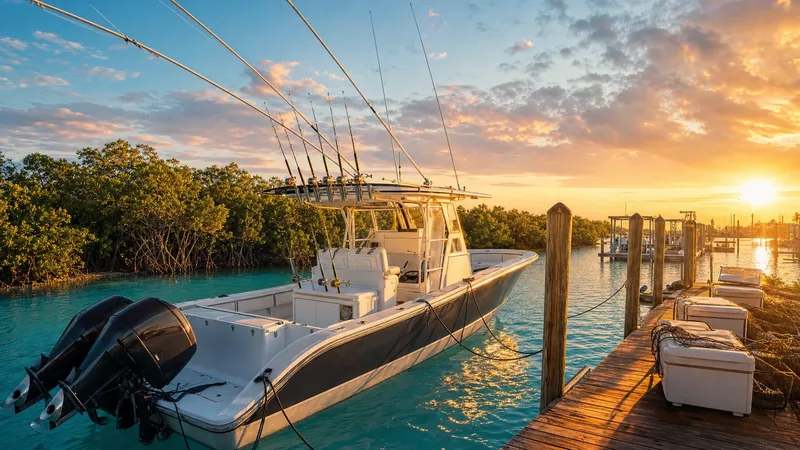
How to Start a Commercial Fishing Business in Florida
How to Start a Commercial Fishing Business in Florida
Florida does not issue one license called a commercial fishing license. The core credential is the saltwater products license, usually called the SPL, issued by the Florida Fish and Wildlife Conservation Commission (FWC). If you are searching for a commercial fishing license in Florida, the florida saltwater products license and its endorsements are what you need. Add the business entity you form with the state, the local tax receipt where one applies, and the trap tags for your gear, and you have the full set of paperwork a working fisher needs.
This guide walks through the order that works: what to gather, how to form the business, which FWC licenses to buy, and where new fishers usually run into trouble. Where a fee or process is not confirmed, the article tells you which agency to confirm it with before you spend money.
Disclaimer: This article is informational content, not legal or tax advice. Licensing rules change, and your situation may need professional review. Talk to a qualified attorney or CPA before you choose a business structure or make tax decisions, and confirm current license requirements directly with the agency named in each step.
What You Need Before You Start
Gather these items before you visit any agency. Several steps depend on the same information, and a missing item usually means a second trip.
- Your legal name, date of birth, and proof of Florida residency if you plan to claim the resident rate. Confirm with FWC which documents it accepts.
- A business name checked against Sunbiz records, plus a backup name in case your first choice is taken.
- A Florida street address for a registered agent. P.O. boxes are not accepted.
- A federal Employer Identification Number (EIN) from the IRS.
- Your vessel's registration or documentation details, dimensions, and home port, if you will fish from a boat.
- A list of the species you plan to catch and the gear you plan to use, including every trap you expect to set.
- A budget that covers the licensing fees in this guide, insurance quotes, and a reserve for the annual report and renewals.
Step 1: Form Your Business Entity With Sunbiz
Most fishers form a Florida limited liability company (LLC) through the Florida Department of State, Division of Corporations, known as Sunbiz. You can file Articles of Organization through Sunbiz eFile, or you can walk in.
The LLC filing fee is $100, and the required registered agent designation costs $25, for $125 total. Every Florida LLC must designate a registered agent with a physical street address in Florida, and the agent must sign to accept the appointment. An entity cannot serve as its own registered agent, but an individual owner can. Your name must end with "Limited Liability Company," "LLC," or "L.L.C." and must be distinguishable on state records. Do not treat the name as approved until you receive a filing acknowledgment. A name reservation costs $25 and lasts 120 days if you need time to finish your paperwork.
Plan for the annual report from day one. The LLC Annual Report costs $138.75 and is filed each year between January 1 and May 1. A $400 late fee applies to reports received after May 1, bringing the total to $538.75. If the report is not filed by the third Friday in September, the company faces administrative dissolution.
The Division does not offer expedited filing. Its walk-in service at 2415 N. Monroe Street, Suite 810, Tallahassee, is open Monday to Friday, 8am to 5pm, and most requests there are completed while you wait. Online filings are processed in the order received. No turnaround time is guaranteed, and images of electronically filed documents post within 3 business days of processing.
A corporation is also an option. Articles of Incorporation for a Florida profit corporation carry a $70 filing fee. The Profit Annual Report costs $150, due in the same January 1 to May 1 window, with a $400 late fee after May 1 for a total of $550. Most single-owner fishing operations choose an LLC because it is simpler to maintain, but tax treatment depends on how the entity is classified. An LLC taxed as a partnership or disregarded entity generally does not file a Florida corporate income tax return, though a Florida Partnership Information Return is required if one or more owners is a corporation. An LLC taxed as a corporation pays the 5.5% Florida corporate income/franchise tax. Florida has no personal income tax and no state franchise tax for LLCs. Ask a CPA which classification fits your ownership.
Step 2: Get Your EIN and Register for State Taxes
Apply for an EIN from the IRS before you open a bank account, hire crew, or register with the state. The EIN is free and identifies your business for federal tax, payroll, and banking purposes.
Florida's state sales and use tax rate is 6%. If your business sells taxable goods, you must register as a sales and use tax dealer with the Florida Department of Revenue before you begin business. Whether your catch sales are taxable, and how sales to dealers or to the public are treated, is a question to confirm with the Department of Revenue. Do not assume the answer. You can start registration at the Department of Revenue registration page.
Step 3: Check for a Local Business Tax Receipt
Florida issues no general statewide business license. Many Florida businesses instead need a local Business Tax Receipt, which is issued under Chapter 205 of the Florida Statutes. Understand what it is: a tax, not a competency license. It does not prove you can fish and does not replace any FWC license. Not every county or city levies one, so you need to ask.
Contact the tax collector or business tax office in the county and city where you will operate. Ask whether a receipt is required for your type of operation and for the address you list. If your operation has no fixed street address, ask how the local office handles that. Keep the receipt with your business records and renew it when the local office requires.
Step 4: Apply for Your Saltwater Products License
The saltwater products license is the foundation of a Florida commercial fishing business. Apply through FWC. The fee depends on your residency and on whether the license covers you as an individual or a vessel. The verified fees are below.
| License | Resident | Nonresident | Alien individual |
|---|---|---|---|
| Saltwater products license (individual) | $50 | $200 | $300 |
| Vessel saltwater products license | $100 | $400 | Confirm with FWC |
The individual license covers the person doing the harvesting. The vessel license covers a boat used to harvest for sale. If you fish from a boat, confirm with FWC which combination your operation requires and whether anyone else aboard needs a license of their own. Do not assume one purchase covers everyone on the vessel.
Step 5: Add the Restricted Species and Species Endorsements
An SPL alone does not authorize every harvest. Florida uses a restricted species endorsement and separate species endorsements for specific fisheries. The ones most relevant to new operators are:
- Restricted species endorsement. Required for harvesting restricted species under FWC rules. Confirm with FWC whether your target species are on the list and confirm the fee.
- Stone crab endorsement. Needed to harvest stone crab. Confirm the fee and eligibility requirements with FWC.
- Spiny lobster endorsement. Needed for commercial spiny lobster harvest. Confirm the fee with FWC.
- Blue crab endorsement. This endorsement is under moratorium, so FWC is not issuing new ones. You must buy it from a current holder. Ask FWC how to confirm a holder's standing and complete the transfer before you pay anyone.
Check this list before you commit to a fishery. A plan that depends on a new blue crab endorsement will not work, and you could spend months looking for a seller.
Step 6: Buy Trap Tags for Every Trap You Set
If you fish with traps, you need trap tags. FWC requires tags for lobster traps, stone crab traps, and blue crab traps. Tags are tied to specific gear, so count your traps before you order and plan for replacements. Confirm the tag fees, the ordering process, and any limits on trap numbers with FWC before you buy gear.
Tip: Tag each trap as you deploy it and keep a log of where every trap sits. A clear log makes it much easier to answer questions from enforcement staff and to track gear losses.
Step 7: Determine Whether You Need a Seafood Dealer License
If you buy catch from other harvesters, process seafood, or sell to buyers, you may need a seafood dealer license. Florida issues wholesale and retail seafood dealer licenses. A wholesale license generally covers sales to other businesses, and a retail license covers direct sales to the public. Confirm which one fits your sales model, and confirm the fees and requirements with FWC. Some fishers sell only to a licensed dealer, so ask FWC whether your sales structure requires a dealer license at all.
Step 8: Register a Fictitious Name If You Trade Under a Different Name
If you sell under a name other than your LLC's legal name, such as a boat name or a seafood brand, you need a Fictitious Name Registration. The fee is $50 to register and $50 to renew. A registration is valid for 5 years and expires on December 31 of the fifth year. Renewal is filed between July 1 and December 31 of the expiration year. You file with the Division of Corporations, which is statewide, not county-based. You must also advertise the name at least once in a newspaper in the county of your principal place of business, although no proof of the advertisement is filed.
You can register through the Sunbiz fictitious name registration page.
Step 9: Set Up Banking, Insurance, and Records
Open a business bank account in the LLC's name using your EIN. Get insurance quotes for the vessel, liability, and any crew before your first trip. Coverage requirements and costs vary, so price them with a licensed insurance agent. Keep copies of every license, endorsement, and tag log, along with landing records, sales receipts, and tax filings. Put the May 1 annual report deadline and every license renewal date on a shared calendar.
Common Mistakes to Avoid
- Assuming one license covers everything. The SPL, the vessel license, endorsements, trap tags, and any dealer license are separate requirements.
- Planning around a new blue crab endorsement. It is under moratorium. Buy from a current holder or choose a different fishery.
- Treating the local receipt as a fishing license. The Business Tax Receipt under Chapter 205 is a tax, not proof of competency.
- Missing the May 1 annual report. The LLC total rises to $538.75 with the late fee, and a missed third Friday in September deadline can lead to administrative dissolution.
- Using a P.O. box for the registered agent. Florida requires a physical Florida street address.
- Printing signs or boat lettering too early. Wait for the filing acknowledgment before you commit to a name.
- Trusting old fee sheets. Endorsement, tag, and dealer fees change. Confirm each one with the agency before you budget.
Expected Results
A properly sequenced setup can help you avoid the most common delays. Once your entity is formed and your licenses are in place, you may be able to sell landings to licensed buyers and start building a customer base. Results depend on the fishery, the season, your gear, and the market, so treat the licensing timeline as the part you control and plan everything else with conservative estimates. Your first season may cost more than it returns.
Official Florida Resources
- Florida Department of State, Division of Corporations (Sunbiz)
- Sunbiz business name search
- Florida Department of Revenue
- Florida Fish and Wildlife Conservation Commission
- Florida SBDC Network
When to Talk to a Professional
Consult a qualified attorney about entity structure, personal liability, and contracts with buyers or crew. Talk to a CPA about entity classification, sales tax treatment, and payroll. Contact FWC directly for any license your operation needs that this guide does not cover. Confirm every fee marked above as "confirm with" before you budget, because those figures are not settled in this guide.