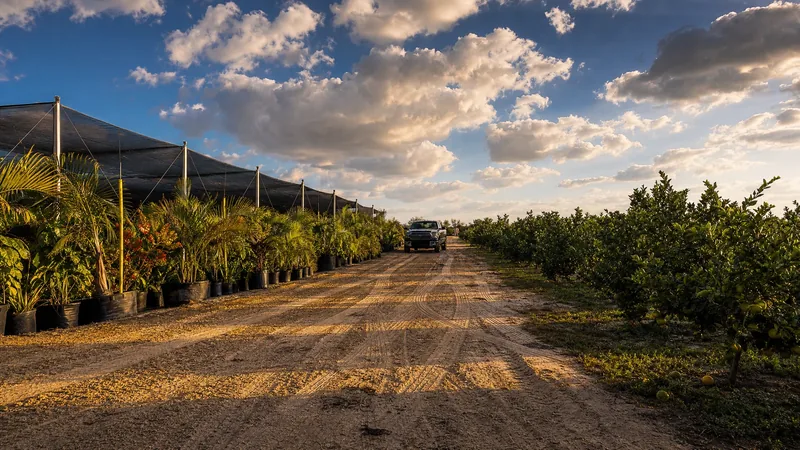
How to Start a Farm or Agritourism Business in Florida
How to Start a Farm or Agritourism Business in Florida
Florida gives working farms more legal room than most states. Land in agricultural use can qualify for a lower property tax assessment, plant nurseries register with the state, and agritourism activities are protected from local regulation. The catch is that these rules come from several agencies, and each one wants its own filing. This guide lays out the steps in the order most farm owners handle them.
Informational only: This article is general information, not legal or tax advice. Fees and rules change. Confirm every figure with the agency named in each step, and talk to a Florida attorney or CPA before you buy land, sign a lease, form an entity, or open a farm store.
What You Need Before You Start
Pull these together before you file anything:
- The parcel ID, deed or lease, and the county property appraiser's record for the land
- A written list of what you will grow, raise, or sell, and where you will sell it (on-site, online, or at markets)
- An estimated plant count if you plan to sell nursery stock, because the state fee depends on it
- A federal Employer Identification Number (EIN) from the IRS, which many farms need for payroll, a business bank account, or an LLC
- Contact information for your county or city planning and zoning office
- A startup budget covering filing fees, insurance quotes, and your first season of inputs
Step 1: List Each Activity as Its Own Business Line
A single farm is often several businesses: crop or livestock production, a plant nursery, a farm stand, a pick-your-own operation, a corn maze, or farm lodging. Each activity can trigger a different registration, a different sales tax treatment, or a different local permit. Write them on one list and check each line against the steps below. Skipping this step is a common reason owners end up filing twice.
Step 2: Confirm Zoning and Land Use
Florida's agritourism statute, s. 570.85, says local governments may not prohibit, restrict, or regulate agritourism on agricultural land. That protects the activity, but it does not settle every question about the land. Call the county or city planning office and ask:
- Does my parcel count as agricultural land for agritourism purposes?
- Which permits apply to a farm stand, parking area, restroom, or other structure I plan to add?
- Are there signage or event limits I should know about before I open to visitors?
Get the answers in writing when you can. A verbal answer from a front desk clerk will not help you if the question comes up later.
Step 3: Choose a Legal Structure and Name
Florida does not issue a general statewide business license, but you still need a legal structure. The options and their state costs are:
| Structure | State filing | Cost |
|---|---|---|
| Sole proprietorship or general partnership using your own legal name | Generally no state name filing | No state fee for the name |
| Sole proprietorship or partnership using a farm name | Fictitious name registration (DBA) | $50 to register, $50 to renew |
| Florida limited liability company (LLC) | Articles of Organization | $125 ($100 filing fee plus the required $25 registered agent designation) |
| Florida profit corporation | Articles of Incorporation | $70 ($35 filing fee plus the required $35 registered agent designation) |
If you form an LLC, plan for these items:
- Name: It must end with Limited Liability Company, LLC, or L.L.C., and it must be distinguishable on the state's records. Search the Sunbiz database at https://search.sunbiz.org/Inquiry/CorporationSearch/ByName before you file. Do not treat the name as yours until you receive a filing acknowledgment.
- Name reservation: A $25 reservation holds the name for 120 days if you need time to file.
- Registered agent: Every Florida LLC needs a registered agent with a physical Florida street address. A P.O. Box does not qualify. The agent must sign to accept the appointment. The $25 designation fee is part of the $125 total, and changing the agent later costs $25. An entity cannot serve as its own registered agent, but an owner or officer who lives or works at a Florida address can.
- Filing: File Articles of Organization through Sunbiz eFile at https://dos.fl.gov/sunbiz/start-business/efile/fl-llc/. The state does not publish a guaranteed turnaround, and it offers no expedited service. Online filings are processed in the order received. If you need faster handling, walk-in service is available at 2415 N. Monroe Street, Suite 810, Tallahassee, Monday to Friday, 8am to 5pm, where most requests are completed while you wait.
Every Florida LLC files an annual report for $138.75 between January 1 and May 1 each year. A $400 late fee applies to reports received after May 1, bringing the total to $538.75. If the annual report is not filed by the third Friday in September, the LLC faces administrative dissolution, so put the deadline on your calendar the day you file.
A Florida profit corporation costs $70 to file and carries a $150 Profit Annual Report due in the same January 1 to May 1 window. A $400 late fee applies after May 1, for a total of $550. Corporations pay the 5.5% Florida corporate income tax on net income for tax years beginning on or after January 1, 2022, so a corporation usually needs a tax adviser in the first year.
For tax treatment, the LLC default matters. An LLC classified as a partnership or disregarded entity generally does not file a Florida corporate income tax return. A Florida Partnership Information Return is still required if one or more owners is a corporation, and any corporate owner must file its own Florida return. An LLC classified as a corporation for federal tax purposes pays the 5.5% Florida corporate income tax. Florida has no personal income tax and no state franchise tax on LLCs. Confirm your federal classification with a CPA before you file.
If you operate under a farm name, such as Example Farms, you need a fictitious name registration. It is filed with the Division of Corporations statewide, not with your county. It costs $50 to register and $50 to renew, and it is valid for five years, expiring December 31 of the fifth year. Renewal is filed between July 1 and December 31 of the expiration year. Florida also requires you to advertise the name at least once in a newspaper in the county where your principal place of business is located. You do not file proof of the advertisement, but you still have to run it. Register at https://dos.fl.gov/sunbiz/start-business/efile/fl-fictitious-name-registration/.
Step 4: Apply for Greenbelt Classification
This is the step most people mean when they search for a Florida agricultural exemption or farm tax exemption. Be aware that it is a property tax classification, not a sales tax exemption and not a business license. Under s. 193.461, greenbelt classification is handled by your county property appraiser. If the land qualifies, it is assessed on its agricultural use rather than its full market value, which can reduce the property tax bill on land that is actively farmed.
Ask the property appraiser these questions before you file:
- What acreage and use requirements apply to my type of farm?
- What is the application deadline, and what documents must I submit?
- Does the classification apply to a farm stand or other structures on the parcel?
- What happens to the classification if the land stops being used for agriculture?
Each county runs the process a little differently, so look up your county's property appraiser website and confirm the details there.
Step 5: Register Your Nursery or Stock Dealer Operation
If you sell plants, trees, or other nursery stock, you need a nursery or stock dealer registration from the Florida Department of Agriculture and Consumer Services (FDACS), Division of Plant Industry, under s. 581.131 and rule 5B-2.002. Florida calls this a registration, although many people search for it as a nursery license. The registration renews every year, and the fee depends on your plant count:
- 1 to 1,000 plants: $35
- Over 300,000 plants: $460
- Counts between those tiers: confirm the exact fee with FDACS before you apply
Count the plants you hold for sale, not the total you plan to grow over several years. An undercount can mean paying the wrong tier, and an overcount can mean paying more than you need to.
Step 6: Register for Sales Tax
Florida's state sales tax rate is 6%. Before you begin business, register as a sales and use tax dealer with the Florida Department of Revenue (DOR) if you sell taxable goods or services. Taxability depends on the product, so unprepared food, prepared food, and gift or souvenir items are not all treated the same way. Confirm each product line with DOR before you open for sales. Register at https://floridarevenue.com/taxes/eservices/Pages/registration.aspx.
Florida also provides agricultural sales tax exemptions for certain purchases and sales. Which exemptions apply to your inputs, equipment, and containers, and what paperwork you must keep, is a question for the Department of Revenue. Ask before you buy, because exemption records are much easier to set up at the start than to rebuild later.
Step 7: Check the Local Business Tax Receipt
A local business tax receipt (BTR) under Chapter 205 is a tax, not a license proving you are qualified to farm. Not every Florida county or city levies one. Under s. 205.064, you do not need a BTR to sell farm products you grew in Florida. That exemption does not automatically cover everything else on the property. Agritourism activities, goods you did not grow, prepared food, or retail items may still require a receipt for the address where you operate. Ask the county or city tax office whether a receipt is required and what it costs.
Step 8: Post the Agritourism Warning Notice
Florida limits agritourism liability for operators who follow the rules. Under s. 570.88, an operator is not liable for injuries caused by the inherent risks of agritourism activities if the warning notice required by s. 570.89 is posted. The protection does not cover gross negligence. Post the notice where visitors will see it, and confirm the required wording and placement with the statute and with your attorney before opening to the public.
The notice does not replace insurance. Ask an insurance agent who writes farm and agritourism policies to quote general liability coverage, and ask your attorney whether any waiver forms add value for your activities.
Step 9: Set Up Banking, Records, and Support
Open a business bank account using your EIN, and keep farm income and expenses separate from personal accounts. Track sales by product line from the first day so you can file sales tax correctly. Free planning and financial help is available through the Florida SBDC Network at https://floridasbdc.org/. An advisor can review your plan before you spend on infrastructure, which is often the cheapest point to catch a problem.
Step 10: Build a Compliance Calendar
| Obligation | When | Agency |
|---|---|---|
| LLC annual report | January 1 to May 1 each year ($138.75; $538.75 after May 1) | Division of Corporations |
| Fictitious name renewal | July 1 to December 31 of the expiration year ($50) | Division of Corporations |
| Nursery or stock dealer registration | Yearly renewal (fee depends on plant count) | FDACS Division of Plant Industry |
| Greenbelt classification | Deadlines set by the county property appraiser | County property appraiser |
| Sales tax returns | Filing schedule assigned by DOR (confirm yours) | Florida Department of Revenue |
| Local business tax receipt | Per your county or city schedule | County or city |
Common Mistakes to Avoid
- Forming the LLC and assuming the name is approved before you receive a filing acknowledgment.
- Assuming greenbelt covers sales tax. It does not. Greenbelt is a property tax classification.
- Miscounting plants. Nursery fees are tiered, so an undercount can mean paying the wrong amount.
- Selling taxable goods before registering with DOR.
- Skipping the county newspaper advertisement for a fictitious name.
- Assuming the agritourism statute answers questions about building, parking, or signage permits.
- Missing the May 1 deadline for the LLC annual report.
Practical Tips
- Contact the property appraiser and planning office early, because greenbelt and zoning reviews tend to take the longest.
- Keep one folder with every filing acknowledgment, renewal receipt, and written answer from an agency.
- Put every renewal date from the calendar above into your phone with a reminder 30 days ahead.
- Ask the SBDC for a plan review before you buy equipment or sign a long-term lease.
Expected Results
A farm that completes these steps in order may find that the first season has fewer surprises. Greenbelt classification may reduce the property tax on land in active agricultural use. Properly filed nursery registration, sales tax registration, and a posted warning notice may make the operation easier to manage and easier to defend if a question comes up. Results vary by county, crop, and sales volume. No step guarantees income, approval timing, or the outcome of any tax review, so plan conservatively, keep records, and recheck each figure before you commit money.
For complex situations, such as farm leases, multi-owner entities, farm stays, or value-added food products, consult a Florida attorney and a CPA before you file or sign anything.