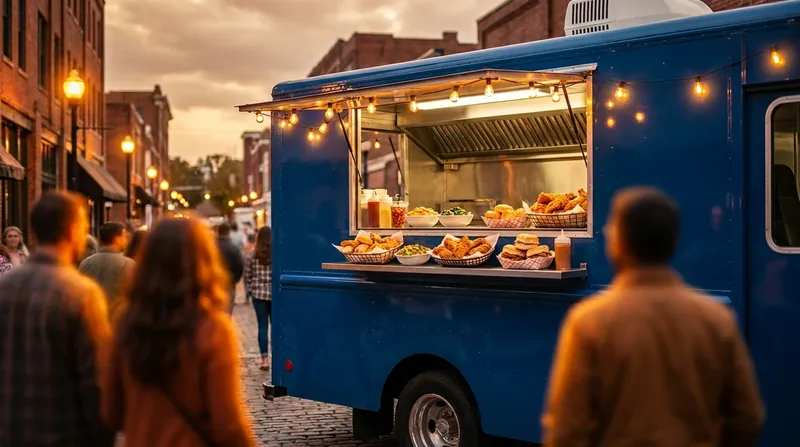
How to Start a Food Truck in Florida: The DBPR License and Local Preemption
How to Start a Food Truck in Florida: The DBPR License and Local Preemption
If you want to start a food truck business in Florida, the central permit is the mobile food dispensing vehicle license issued by the Florida Department of Business and Professional Regulation (DBPR), Division of Hotels and Restaurants. That license lets you prepare and sell food from a truck under state food safety rules. Two other facts shape the process. Florida has no general business license, and state law limits how far cities and counties can go in adding their own requirements. This guide walks through the steps in order, flags the costs we can verify, and marks the points you need to confirm with each agency.
Disclaimer: This article is informational only. It is not legal, tax, or regulatory advice. Fees, rules, and statutes change, so confirm current requirements with the agency named in each step. For complex situations, talk with a Florida attorney or a certified public accountant (CPA) before you commit money.
What You Need Before You Start
Gather these items before you file anything. A missing document usually delays the license more than the fees do.
- A business name, and a Florida formation filing if you plan to use an LLC (see Step 2)
- A federal Employer Identification Number (EIN) from the IRS, which you can obtain online at no charge
- A written menu listing every item you will prepare, cook, hold, or sell from the truck
- A list of truck equipment, including sinks, refrigeration, hot holding units, and water tanks
- A written commissary agreement with a licensed kitchen where you prep, store, and clean
- A list of the cities and counties where you plan to park and sell
- Funds for the $397 DBPR license package (new license, full year) and, if you form an LLC, the Sunbiz filing fee
Expect DBPR to ask for a description of your menu and equipment. Confirm the exact documents it wants before you assemble the file, because the application requirements are set by the agency and can change.
Step 1: Understand the Florida Licensing Structure
Florida does not issue a general statewide business license. The permits you need depend on what you sell and where you operate. For a food truck, the list usually includes these items:
- State food license: the DBPR mobile food dispensing vehicle license, which covers food safety and the vehicle that carries the food.
- State sales tax registration: required before you begin business if you sell taxable goods or services. Prepared food sold for immediate consumption is generally taxable, so confirm how your specific menu is treated with the Florida Department of Revenue.
- Local business tax receipt: a local tax levied by some cities and counties under Chapter 205, Florida Statutes. Not every county or city levies it. It is a tax, not a competency license, so it does not prove you can run a food operation.
- Entity filing: only if you form an LLC or corporation with the Florida Division of Corporations.
Step 2: Form Your Business Entity (Optional but Common)
Many owners form an LLC before they apply for licenses. That keeps the truck, bank account, and vendor contracts in the company name rather than your personal name. The Florida Division of Corporations, which runs the Sunbiz system, handles the filing. The current figures are:
- Articles of Organization filing fee: $100
- Registered agent designation: $25 for an LLC. The agent needs a physical street address in Florida, since a P.O. Box will not work. An entity cannot serve as its own registered agent, but an owner or officer can.
- Name rules: the name must end in LLC, L.L.C., or Limited Liability Company, and it must be distinguishable on state records. Do not assume your name is approved until you receive a filing acknowledgment.
- Annual report: $138.75, filed each year between January 1 and May 1. A $400 late fee applies to reports received after May 1, bringing the total to $538.75. Failure to file by the third Friday in September leads to administrative dissolution.
Sunbiz does not offer expedited filing. You can file online through Sunbiz eFile. If you prefer to file in person, the walk-in service office is at 2415 N. Monroe Street, Suite 810, Tallahassee, open Monday to Friday, 8am to 5pm. Most requests there are completed while you wait.
Step 3: Secure a Commissary
Florida's mobile food rules generally require a food truck to operate from an approved commissary. A commissary is a licensed food establishment where you store food and supplies, prepare items you cannot finish on the truck, and handle waste and water. Many owners rent time in a shared commercial kitchen, while others lease a dedicated space.
Put the arrangement in writing. Include the days and hours you have access, the storage you get, how you handle wastewater, and who to call if the kitchen closes. DBPR will expect to see the commissary arrangement as part of your application. Confirm with DBPR how often the truck must report to the commissary and what records you must keep, since those details come from the rules and may change.
Step 4: Apply for the DBPR Mobile Food Dispensing Vehicle License
DBPR's Division of Hotels and Restaurants issues the mobile food dispensing vehicle license. Here is the cost for a new license:
| Item | Amount |
|---|---|
| Application fee | $50 |
| License fee (full year) | $347 |
| Total for a new license | $397 |
These figures cover the new license only. Renewal fees, late charges, and any inspection or plan review fees are not set out in this guide. Ask DBPR for those amounts before you budget, and ask whether the truck itself carries any separate charge.
Follow this sequence when you apply:
- Finalize your menu and equipment list. Any change after filing can require a new review, so lock down the menu before you submit.
- Confirm the application method. Search the DBPR website for the mobile food dispensing vehicle application, and confirm whether it is filed online, by mail, or in person.
- Submit with your commissary agreement and supporting documents. Keep copies of everything you send.
- Plan for an inspection. Confirm with DBPR whether the truck is inspected before the license is issued, and what the inspector will check.
- Confirm the person-in-charge requirements. Ask DBPR whether a certified food manager must be on duty and how to document that certification.
- Confirm display and carry rules. Ask DBPR where the license must be kept and whether it must be displayed on the vehicle.
Step 5: Register for Sales Tax
Florida's state sales tax rate is 6%. Because most food trucks sell prepared food, plan to register with the Florida Department of Revenue before your first sale. You can start the registration here: Florida Department of Revenue sales tax registration.
Two practical points matter from day one. First, counties may add a local surtax on top of the state rate, so confirm the rate that applies in each county where you park. Second, the Department assigns your filing schedule, so set aside sales tax as you collect it rather than at filing time. Sales tax questions about your specific menu should go to the Department, and a CPA can help you set up bookkeeping that separates tax from revenue.
Step 6: Check the Local Business Tax Receipt and Location Rules
Some Florida cities and counties levy a local business tax receipt (BTR) for businesses operating in their jurisdiction. Others do not. Check the rules for the city or county where your commissary sits and for every place you plan to park. Do not assume a BTR applies everywhere, and do not assume it is missing because your last city did not ask for one.
The BTR is a tax, not a license, so it does not replace the DBPR license. Ask the local tax office whether a BTR applies to your business type and location, and whether the rate depends on your zone or your gross receipts.
What Local Preemption Means for Your Food Truck
Section 509.102, Florida Statutes, enacted in 2020, bars cities and counties from requiring a mobile food dispensing vehicle to obtain any other license, permit, or fee beyond the state license. It also bars them from banning these vehicles across their entire jurisdiction. In 2023, SB 752 added temporary commercial kitchens to the framework. Read the current statute text and confirm how the provisions apply to your setup before you make decisions based on this summary.
Preemption does not mean you can park anywhere. Zoning, location, and public property rules still apply. Here is how the main categories break down:
| Local rule | Status under state law | What to do |
|---|---|---|
| Extra license, permit, or fee for food trucks | Barred by s. 509.102 (2020) | Ask the city or county for the written legal basis before you pay |
| Jurisdiction-wide ban on food trucks | Barred by s. 509.102 (2020) | Keep a copy of the statute and the local ordinance you received |
| Zoning, parking, and location limits | Still apply | Confirm the rules for each address before you schedule a stop |
| Local business tax receipt (Chapter 205) | A tax, not a license | Ask the local tax office whether it applies to you |
Preemption protects you from paperwork and bans that cannot be justified under state law. It does not replace the location planning that decides which events and corners you can actually work.
Expected Results
Once you have the DBPR license, the sales tax registration, and an agreed commissary, the early results usually depend on location and the menu more than on paperwork. A clean application and a written commissary agreement may reduce delays at the permitting stage. Owners who confirm each parking location before they buy inventory often avoid wasted days, though no timeline or sales figure is guaranteed.
Food safety claims deserve the same care. Describe your practices in terms of what your written procedures are designed to do, and make sure your menu descriptions match the approved menu on file with DBPR.
Common Mistakes to Avoid
- Buying the truck before confirming the menu and equipment. A layout that cannot support the approved menu can force costly changes.
- Paying a local fee without a written basis. If a city or county demands an extra license, ask for the legal authority in writing.
- Treating preemption as permission to park anywhere. Zoning and location rules still control where you can sell.
- Using a commissary without a written agreement. Verbal arrangements are hard to document when an inspector asks.
- Missing the Sunbiz annual report window. A report filed after May 1 costs an extra $400, and missing the third Friday in September can lead to administrative dissolution.
- Budgeting only for the $397 DBPR package. Add formation fees, insurance, equipment, commissary rent, and any local charges.
- Registering for sales tax after your first sale. Start the registration before you begin business.
Tips for Staying Compliant
- Keep one binder, digital or paper, with the DBPR license, sales tax registration, commissary agreement, EIN confirmation, and Sunbiz filing acknowledgment.
- Keep a log for each parking location that records the zoning contact and any written confirmation you received.
- Calendar the Sunbiz annual report window (January 1 to May 1) and your DBPR renewal date as soon as you receive the license.
- Ask the Florida SBDC Network about advising for your plan. Confirm the current cost and availability with the network before you schedule.
- Before you sign a commissary lease or buy a truck, pay for a short consult with a Florida attorney or CPA. A few hours of review costs less than unwinding a bad contract.
Official Resources and What to Confirm
- Florida Department of State, Division of Corporations (Sunbiz): https://dos.fl.gov/sunbiz/
- Florida Department of Revenue: https://floridarevenue.com/
- Florida SBDC Network: https://floridasbdc.org/
- Florida Department of Business and Professional Regulation, Division of Hotels and Restaurants: search the DBPR website for the mobile food dispensing vehicle license
Confirm these items with the agency before you rely on them: the renewal fee, any inspection or plan review charge, the person-in-charge certification rule, display requirements, the commissary reporting schedule, and whether a local BTR applies at each location.
Next Steps
Start with the entity decision and the commissary agreement, since both take time to finalize. Then file the DBPR application with a locked menu and a complete equipment list, register for sales tax before your first sale, and check the local rules for every place you plan to operate. Work through the list in order, and confirm each figure with the agency that sets it.
This article is informational and is not legal, tax, or regulatory advice. Consult a qualified Florida attorney or CPA for your specific situation.
Keep exploring: related Florida guides
- Florida Cottage Food Law
- How to Open a Restaurant in Florida
- How to Start a Coffee Shop Business in Florida
- How to Start a Vending Machine Business in Florida
- How to Start an LLC in Florida
- Florida Business License
- How Much Does It Cost to Start a Business in Florida
- All Florida business types
- Every Florida guide in one place