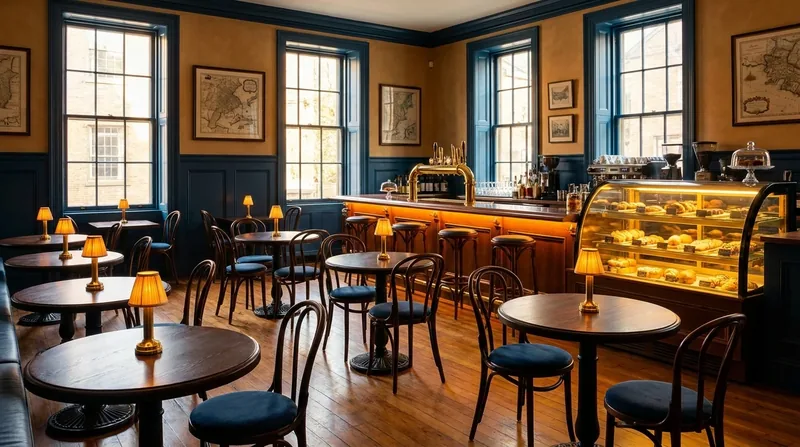
How to Open a Restaurant in Florida: DBPR Food Service License
How to Open a Restaurant in Florida: DBPR Food Service License
If you plan to open a restaurant in Florida, you will hear the phrase “food license” used for almost everything. In practice, the license most restaurants need is the public food service establishment license issued by the Florida Department of Business and Professional Regulation (DBPR), Division of Hotels and Restaurants. This guide covers the steps in the order most new operators handle them, what each one costs, and where you need to confirm details directly with the agency.
Informational content only. This article is not legal, tax, or licensing advice. Rules, fees, and procedures change, and your location, menu, ownership structure, and alcohol plans all affect what applies to you. Talk to a qualified attorney and a CPA before you sign a lease or choose a business structure, and confirm every figure below with the agency named before you pay.
What the DBPR food service license is (and what it is not)
Florida does not issue a general statewide business license. DBPR licenses specific professions and trades, and food service is one of them. A DBPR public food service establishment license authorizes you to operate a food service business that DBPR regulates. It is tied to your location and your operations. It is not a tax.
Three other items are often confused with it:
- Local Business Tax Receipt (LBTR). Many Florida counties and cities levy a Business Tax Receipt for the address where you operate. Under Chapter 205 it is a local tax, not a competency license, and not every county or city levies one. Check with your city or county before you sign a lease.
- Sales tax registration. Restaurant sales are generally taxable in Florida. Businesses selling taxable goods or services must register as a sales and use tax dealer with the Florida Department of Revenue before beginning business.
- Alcohol licensing. A DBPR food service license does not cover beer, wine, or liquor. Alcohol is handled separately (see the Special Food Service section below).
DBPR or FDACS: which agency permits you?
Before you spend money on anything else, confirm which agency issues your permit. Most restaurants go through DBPR. However, when the business is a grocery, a retail bakery, or a food manufacturer, the Florida Department of Agriculture and Consumer Services (FDACS) may permit it instead. Ask both agencies which one applies to your concept in writing. Applying to the wrong agency costs weeks, and the fees you paid there are not a substitute for the correct permit.
Materials and information you need before you apply
Gather these items before you start the application. Missing items are the most common cause of delays.
- Business entity documents. If you form a Florida LLC, keep your filed Articles of Organization and the filing acknowledgment from Sunbiz. Do not assume a name is approved until you receive that acknowledgment.
- Federal Employer Identification Number (EIN) for the business entity.
- Proof of site control, such as a signed lease or purchase contract, showing the physical address.
- Zoning and LBTR confirmation for that exact address, in writing if you can get it.
- Floor plan and equipment list showing the kitchen layout, sinks, cold storage, hot holding, and dish area. You need this for plan review.
- Seat count. Count the seats you will have on opening day. Your annual fee depends on this number.
- Menu and food handling plan describing what you cook, how you store it, and where it comes from.
- Certified food protection manager certificate for the person who will supervise food handling. Confirm with DBPR which certifications it accepts.
- Identification and contact details for owners and the designated person in charge.
- A payment method for the $50 application fee and the annual fee.
Step-by-step: getting your DBPR food service license
- Choose your business structure and register it. Many restaurant owners form a Florida LLC. The required Sunbiz fee for an LLC is $125, which includes the $25 registered agent designation. The registered agent must have a physical street address in Florida (no P.O. Box), and an entity cannot serve as its own registered agent. If you will operate under a restaurant name that differs from your legal name, you also need a Fictitious Name Registration. It costs $50 to register and $50 to renew, and it is valid for 5 years. Register at Sunbiz (Florida Department of State, Division of Corporations).
- Secure the location and confirm zoning. Do not sign a long-term lease until the local government confirms in writing that a restaurant is allowed at that address. Ask at the same time whether the address requires a Local Business Tax Receipt and what it costs locally, because that figure varies by jurisdiction.
- Obtain your Local Business Tax Receipt. Apply through your city or county. Some localities require it before you can apply for state licenses, and others do not levy one at all. Keep the receipt with your other permits.
- Submit plans for plan review. DBPR reviews your floor plan and equipment layout before you build out. Submit the plan, the equipment list, and the menu. Confirm the plan review fee and document requirements with DBPR. Do not order equipment or finish construction until the plans are reviewed. Changes made after the fact are expensive, and a plan that does not match the build can delay your opening.
- Certify your food protection manager. Get at least one person certified as a food protection manager and make sure that person is on the premises during operating hours. Confirm the exact certification requirements, approved courses, and the number of certified staff required for your seat count with DBPR.
- Apply for the DBPR public food service establishment license. The application fee is $50. The annual fee is based on your seat count: $262 for 1 to 49 seats, rising to $357 for 500 or more seats. Confirm the exact tier for your count with DBPR before you pay. Your first-year state fees fall between $312 (the $50 application plus the $262 minimum annual fee) and $407 (the $50 application plus the $357 top annual fee), before plan review, LBTR, sales tax, and any other charges. Apply through the DBPR online licensing system, and check the DBPR Division of Hotels and Restaurants page at myfloridalicense.com for the current form and instructions.
- Register for sales tax before you begin business. Register with the Florida Department of Revenue at floridarevenue.com. The state sales tax rate is 6%, and a county surtax may also apply to your location. Confirm the rate for your address and your filing schedule with the Department of Revenue.
- Prepare for inspection. Expect DBPR to inspect the establishment before or around opening. Walk the space against your approved plans, check that all equipment is installed as drawn, and confirm that your food protection manager and required documents are on site. Ask DBPR how its pre-opening inspection is scheduled and what it covers.
- If you plan to serve alcohol, check the Special Food Service thresholds. The Division of Alcoholic Beverages and Tobacco (DABT) handles the Special Food Service (SFS) license. Under s. 561.20, the restaurant needs at least 2,000 square feet of service area, at least 120 seats, and at least 51% of gross food and beverage revenue from food and nonalcoholic beverages. Confirm with DABT how each threshold is measured and whether your concept qualifies before you sign a lease or buy a liquor inventory.
- Calendar your renewals. The DBPR license renews annually, so confirm the renewal date and fee with DBPR when you are licensed. If you form an LLC, the annual report is due each year between January 1 and May 1. The fee is $138.75, and a $400 late fee applies to reports received after May 1 (a total of $538.75). Failure to file by the third Friday in September leads to administrative dissolution.
Restaurant license cost summary
Use this table to budget. The figures marked “confirm” vary or are set by the agency, so do not treat them as settled until the named agency gives you the number.
| Item | Amount | Agency | Notes |
|---|---|---|---|
| DBPR application fee | $50 | DBPR | Paid when you apply |
| DBPR annual fee | $262 (1 to 49 seats) to $357 (500+ seats) | DBPR | Seat-based. Confirm your tier. |
| Plan review | Confirm | DBPR | Required before build-out |
| Certified food protection manager training and exam | Confirm | Course provider and DBPR | Price varies by provider |
| Local Business Tax Receipt | Confirm | City or county | Not every locality levies one |
| LLC filing (Articles of Organization) | $125 | Sunbiz | Only if you form an LLC |
| Registered agent designation (LLC) | $25 | Sunbiz | Included in the $125 LLC filing total. Changing the agent later costs the same |
| Fictitious Name Registration | $50 to register, $50 to renew | Sunbiz | Valid 5 years |
| LLC Annual Report | $138.75 ($538.75 after May 1) | Sunbiz | Due January 1 to May 1 each year |
| Sales tax registration | No fee | Department of Revenue | State rate is 6%, plus any county surtax |
| Alcohol license (SFS) | Confirm | DABT | Only if you serve alcohol |
The DBPR application and annual fee alone are not your total launch cost. Equipment, build-out, insurance, deposits, and working capital will be far larger for most restaurants. Treat the state fees as the smallest line in your budget, not the whole picture.
Tips that save time
- Call before you commit. Ask DBPR, your local tax collector, and the Department of Revenue for written guidance on your specific address and concept. A phone call costs nothing and can prevent a redesign.
- Design for the plan you submitted. Build exactly what the approved plan shows. If you change the layout, submit the change before you build it.
- Count seats at the highest honest number. Your annual fee depends on the seat count you report. Count the seating you actually plan to offer on opening day, including outdoor seating if it is part of the operation, and confirm with DBPR how it is counted.
- Keep a single permit binder. Store your DBPR license, LBTR, sales tax certificate, food protection manager certificate, and plan review approval in one place, and post what the rules require where customers and inspectors can see it.
- Use free help. The Florida SBDC Network at floridasbdc.org offers business advisory support, and a CPA or attorney can review your structure before you file.
Common mistakes to avoid
- Signing a lease before zoning and LBTR are confirmed. A location that cannot host a restaurant is an expensive mistake to discover after you have paid rent.
- Building out before plan review. Equipment and construction that does not match the reviewed plans can force rework.
- Miscounting seats. The annual fee tier depends on seat count, and the alcohol thresholds depend on seating and square footage too.
- Assuming the food license covers alcohol. It does not. Alcohol requires a separate DABT license.
- Applying to the wrong agency. If your concept is a grocery, retail bakery, or food manufacturer, confirm whether FDACS permits you before you file with DBPR.
- Opening before sales tax registration. Register with the Department of Revenue before you begin business, not after your first week of sales.
- Using a trade name without registering it. If you operate under a name other than your legal name, file the Fictitious Name Registration first.
- Treating $312 as the total cost. The first-year state fees are only part of your launch budget.
What to expect once you are licensed
Once DBPR approves your application and your inspection is complete, you may be able to begin regular food service at the approved location. Timing depends on how quickly your plan review, inspection, and paperwork move, so plan for delays and confirm the current processing time with the agency. Your license is annual, so expect to renew each year and to keep your food protection manager and records current between renewals. Inspections may continue after opening, and a clean, well-documented kitchen is the best way to keep that process routine.
If you are forming an LLC, Sunbiz notes that online filings are processed in the order received, and images of electronically filed documents post within 3 business days of processing. No guaranteed turnaround is published, and walk-in service is available at 2415 N. Monroe Street, Suite 810, Tallahassee, Monday to Friday 8am to 5pm.
Where to confirm and get help
- Florida Department of State, Division of Corporations (Sunbiz): dos.fl.gov/sunbiz
- Sunbiz eFile for Florida LLCs: dos.fl.gov/sunbiz/start-business/efile/fl-llc/
- Fictitious Name Registration: Sunbiz fictitious name filing
- Florida Department of Revenue: floridarevenue.com, with sales tax registration at the registration page
- DBPR Division of Hotels and Restaurants: myfloridalicense.com
- Florida SBDC Network: floridasbdc.org
Your local city or county tax collector handles the Local Business Tax Receipt, and FDACS handles permits for grocery, retail bakery, and food manufacturing businesses. Confirm the contact details for both on their official websites before you visit.
Final checklist
- Confirm whether DBPR or FDACS permits your concept.
- Register your entity and any fictitious name with Sunbiz.
- Confirm zoning and the Local Business Tax Receipt for the address in writing.
- Submit your plans for plan review before you build out.
- Certify at least one food protection manager.
- Apply to DBPR with the $50 application fee and the seat-based annual fee tier.
- Register for sales tax before you begin business.
- Prepare for inspection and keep your permits posted and organized.
- Check DABT thresholds if you plan to serve alcohol.
- Calendar your DBPR renewal and any LLC annual report due each year from January 1 to May 1.
Disclaimer: This article is informational only and is not legal, tax, or licensing advice. Requirements, fees, and processing times change, and this guide does not replace the official rules or the guidance of the agencies named above. Before you sign a lease, form an entity, or commit funds, consult a qualified attorney and a certified public accountant who can review your specific situation.
Keep exploring: related Florida guides
- How to Start a Food Truck in Florida
- How to Start a Vending Machine Business in Florida
- Florida Cottage Food Law
- How to Get a Liquor License in Florida
- How to Start an LLC in Florida
- Florida Business License
- How Much Does It Cost to Start a Business in Florida
- All Florida business types
- Every Florida guide in one place